Despite his new trillionaire status, Elon Musk says money ‘will stop being relevant’ in the future because of AI
· Fortune
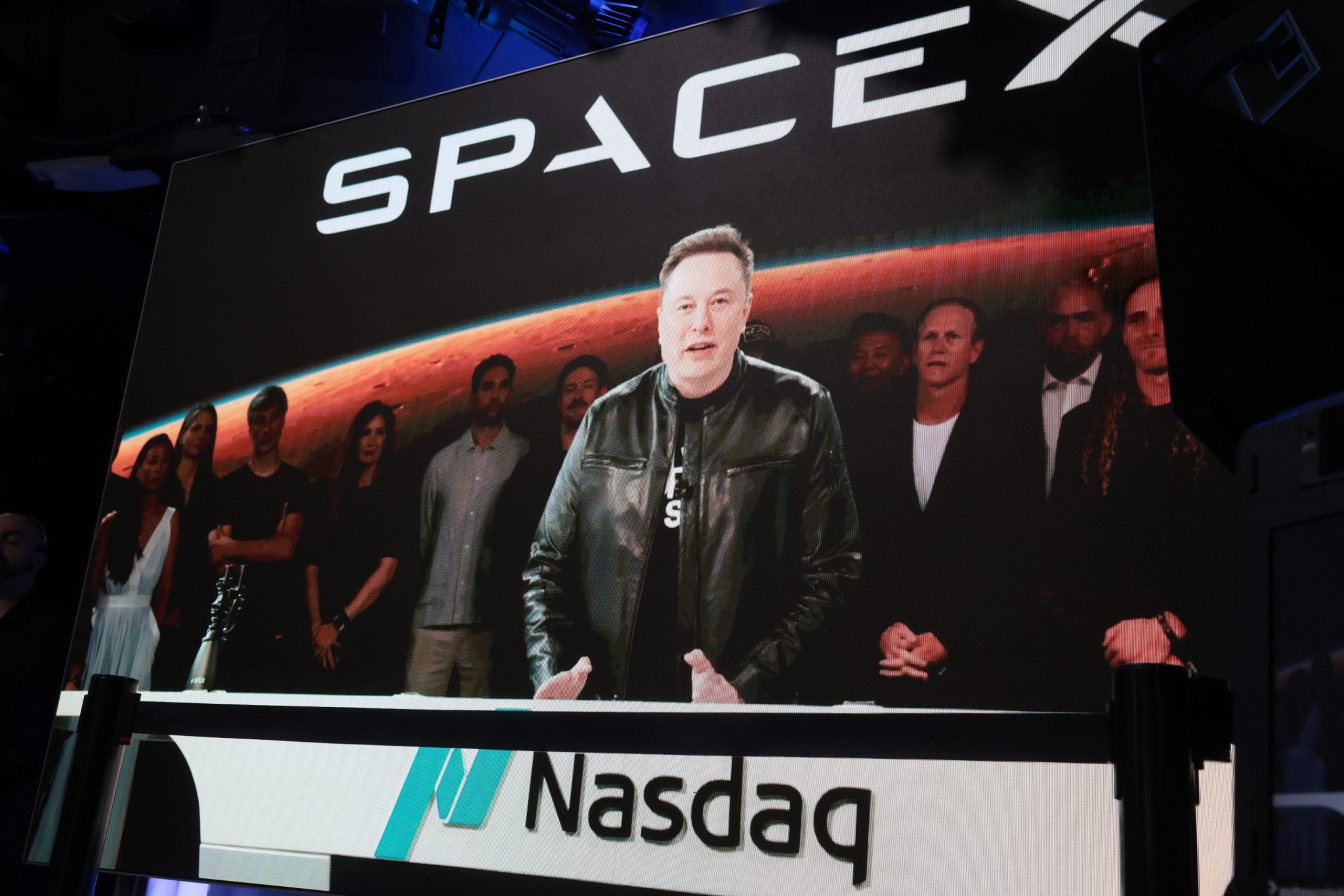
SpaceX’s IPO has made Elon Musk the world’s first trillionaire, but the CEO spent the lead-up to the moment espousing his belief that money won’t matter one day.
In a recent conversation with Peter Diamandis, an entrepreneur and executive chairman of the XPrize Foundation, Musk fleshed out his moonshot visions for the future, which have previously included work being completely optional and retirement becoming inapplicable.
Visit somethingsdifferent.biz for more information.
Musk said in a video clip Diamandis uploaded to X on Thursday that in an AI-powered world where robots serve humans, “AI and robots are going to make so much stuff and provide so many services that they’ll run out of things to do for humans.”
As a result, the output of goods and services will exceed the supply of money, effectively creating deflation. With cheap automated labor and no growth in the money supply because work is completed by robots instead of humans, there will be no need for currency.
“I think money will stop being relevant at some point in the future,” he said.
However, Musk’s own companies have struggled to deliver on their automation promises. Though the CEO has set a goal of having 80% of Tesla’s value come from its humanoid Optimus robots, the bots have experienced multiple production delays.
Musk’s imagined future of money losing its relevance contrasts with his immense wealth gains. SpaceX’s IPO has cemented Musk’s status, for now, as the world’s richest man, with a net worth surpassing $1.1 trillion following SpaceX shares opening at $150 per share, boosting Musk’s wealth by about $180 billion in a single day.
Diamandis called out the irony of Musk’s obsession with a money-less society amid the CEO’s own surging net worth: “So just as you’re becoming a multi-trillionaire, money starts to have less value?”
“Yeah, pretty much,” Musk replied.
What is Elon Musk’s vision for the role of money?
Musk has cited the Culture series of sci-fi novels by Iain M. Banks, a self-proclaimed socialist author, as the inspiration behind his own predictions for the future. In the series, superintelligent AI beings fill a post-scarcity world without traditional jobs. In his own vision, Musk sees “universal high income” as the solution to any concerns around scarcity, but the framework has mixed support.
OpenAI CEO and Musk’s rival, Sam Altman, once advocated for universal basic income—or when citizens receive consistent and unconditional cash payments—even backing a study in 2024 that found $1,000 payments to low-income Americans reduced stress and food insecurity. However, Altman has since turned his back on the idea, instead advocating for “collective ownership,” he told The Atlantic in April.
Still, U.K. Minister for Investment Lord Jason Stockwood, who is also a longtime tech investor, told the Financial Times earlier this year that the government is weighing introducing universal basic income as a way to support workers in areas with high AI exposure.
“Undoubtedly we’re going to have to think really carefully about how we soft-land those industries that go away, so some sort of UBI, some sort of lifelong learning mechanism as well so people can retrain,” he said.
Though Musk anticipates widespread automation in the next decade or two, economists are skeptical about how pervasive and fast these labor and policy shifts will be. Ioana Marinescu, an economist and associate professor of public policy at the University of Pennsylvania, has studied universal basic income as a pragmatic way to address AI-related job displacement, especially as unemployment insurance benefits are contingent upon evidence of previous employment, which may be challenging for young people trying to enter the workforce while also being particularly vulnerable to AI displacement.
However, the benefits of universal basic income are limited for low-income individuals, many of whom are able to increase spending only modestly, as they are saddled with debt or poverty.
While the ultrawealthy like Musk may advocate for some form of universal income, they may be unwilling to pay taxes on their wealth to pay for it, Marinescu said, raising questions about the transition from how wealth is distributed today to how it is created and shared in Musk’s predicted world.
“Essentially, I’m worried that people who benefit from AI, after the fact, are going to say, ‘Well, why do we have to pay for all these people’s problems?’” she previously told Fortune. “But right now, we don’t yet know exactly who wins, who loses.”
Musk, for his part, demurred when Diamandis asked about his own trillionaire status. SpaceX did not respond to Fortune’s request for comment.
“It just represents some percentage ownership in companies that I built, and it’s not, like, sitting in the bank account,” he said. “It’s just literally, I own a percentage of companies. The companies are doing lots of useful things. The value of the company grows. I own a percentage of the companies, and that sums up to that number, which seems high.”
This story was originally featured on Fortune.com