The Invisible Systems Behind Modern Business: A Conversation With Sekhar Manda
· Free Press Journal
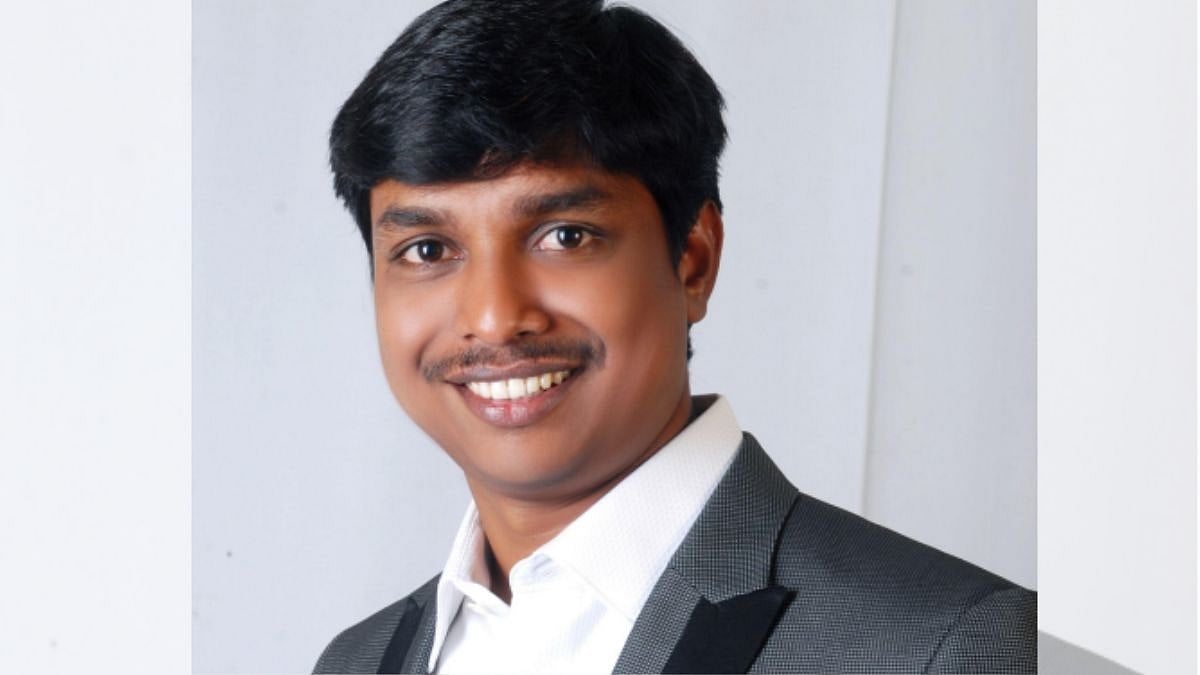
Enterprise technology rarely attracts public attention unless something fails. Financial systems process millions of transactions silently, compliance frameworks operate in the background, and cloud infrastructures support global organizations without most people ever noticing. Yet these systems form the backbone of modern business, and the engineers responsible for building them play a critical role in how companies operate and evolve.
One of those engineers is Sekhar Manda, an SAP ERP Technical Architect whose work over nearly two decades has focused on enterprise transformation, cloud architecture, and large-scale ERP modernization. Having worked with organizations including IBM, Cognizant, Capgemini, and LTIMindtree, Manda has contributed to projects spanning pharmaceuticals, manufacturing, and financial operations.
Visit mchezo.co.za for more information.
In this interview, he discusses the evolution of enterprise systems, the growing importance of cloud-native architecture, and why the most important technology is often the least visible.
On Why Enterprise Systems Matter More Than Ever
Q: Enterprise systems are often described as the “backbone” of organizations. Why do you think they’ve become so important today?
Sekhar Manda: Businesses today operate in a much more connected environment than they did even ten years ago. Financial operations, supply chains, compliance, customer systems — everything is integrated. Because of that, companies need enterprise systems that are reliable, scalable, and adaptable.
We’re also seeing organizations move aggressively toward digital transformation. Gartner projected global IT spending would exceed $5 trillion in 2024, and a large part of that investment is focused on cloud migration and modernization initiatives. Companies are no longer treating ERP systems as static operational tools. They see them as strategic platforms that influence decision-making and long-term growth.
Q: Much of your work has involved SAP S/4HANA and SAP Business Technology Platform. What makes these technologies significant?
Sekhar Manda: The shift toward platforms like SAP S/4HANA and SAP BTP reflects a broader change in how organizations think about architecture. Legacy systems were often rigid and difficult to extend. Modern platforms are designed to be modular and cloud-native.
My focus has been on building systems using clean core principles and RESTful programming models so organizations can innovate without disrupting their core operations. That flexibility becomes very important as businesses scale or adapt to changing market conditions.
On Financial Systems and Large-Scale Transformation
Q: One of the projects mentioned in your background involved accounts receivable factoring implementations during your time with IBM. Can you explain what that work involved?
Sekhar Manda: The project focused on improving working capital management through financial process optimization. We implemented systems that enabled organizations to convert receivables into immediate liquidity more efficiently.
At scale, these kinds of systems can have a meaningful operational impact. In this case, the implementation supported liquidity improvements estimated between $15 million and $40 million per day across global operations.
What made the project interesting was that it wasn’t only a technical challenge. Financial systems influence how businesses invest, manage risk, and respond to market conditions. The architecture behind those systems has to be stable and secure because the operational dependency is extremely high.
Q: What are the biggest challenges when modernizing enterprise infrastructure?
Sekhar Manda: One challenge is balancing innovation with stability. Organizations want to adopt cloud platforms, automation, and analytics capabilities, but they also rely on systems that support mission-critical operations.
Another challenge is integration. Large enterprises usually have years of accumulated systems and processes. You can’t simply replace everything overnight. The architecture has to allow modernization while still supporting existing operations.
Experience becomes important there because every organization has different constraints. A solution that works in one environment may not work in another.
On Security, Compliance, and Risk
Q: Cybersecurity and data governance have become major concerns for enterprises globally. How has that influenced your work?
Sekhar Manda: Security is now foundational to enterprise architecture. IBM’s Cost of a Data Breach Report estimated the average global data breach cost at $4.45 million in 2023, which shows how significant the risk has become.
In some of my projects, particularly in financial and regulated environments, the focus has been on embedding security directly into system design rather than treating it as an additional layer afterward.
For example, during my work with LTIMindtree, I developed financial data security frameworks involving field-level masking for sensitive banking and tax information across multi-region systems. The goal was to strengthen governance while maintaining usability for business teams.
Q: You’ve also worked extensively in pharmaceutical environments. How different are those projects from other industries?
Sekhar Manda: Pharmaceutical systems require very strict compliance and auditability. Processes have to be highly traceable because regulatory requirements are extremely detailed.
At Cognizant, one of the initiatives I worked on involved implementing digital signature workflows within SAP systems for batch approval processes. It allowed organizations to move from manual approvals toward end-to-end electronic workflows.
Digital transformation in regulated industries is not only about efficiency. It’s also about improving transparency and reducing operational risk. Deloitte research has shown that digital workflows can significantly reduce process inefficiencies while improving compliance tracking, and that’s consistent with what I’ve observed in practice.
On Leadership and the Human Side of Technology
Q: Your career has involved managing distributed teams across different regions. What have you learned from that experience?
Sekhar Manda: Technical expertise is important, but communication is equally critical. Large enterprise projects often involve teams spread across multiple countries and time zones. If there’s misalignment between technical teams and business stakeholders, projects become difficult very quickly.
A lot of successful delivery comes down to clarity — making sure everyone understands not only the technical requirements, but also the business objectives behind them.
Q: You originally studied mechanical engineering before specializing in enterprise systems. Did that background shape your approach?
Sekhar Manda: I think it influenced how I approach problem solving. Engineering teaches you to think systematically and analytically, and those skills transfer well into enterprise architecture.
But a large part of learning in this field comes from experience. Every system has unique operational requirements, and you develop judgment over time by working through different kinds of challenges.
Q: What do you think younger engineers entering enterprise technology today should focus on?
Sekhar Manda: Technical knowledge is important, but adaptability matters even more. Technologies change very quickly. Someone entering the field today will likely work across cloud systems, AI-enabled platforms, low-code tools, and automation technologies during their career.
At the same time, foundational understanding still matters. If you understand architecture principles and business processes well, it becomes easier to adapt to new technologies as they emerge.
On the Future of ERP and Cloud Architecture
Q: Where do you see enterprise systems heading over the next several years?
Sekhar Manda: We’re moving toward systems that are increasingly intelligent, predictive, and interconnected. Artificial intelligence and real-time analytics are already influencing how organizations manage operations and make decisions.
McKinsey & Company has reported that companies implementing successful digital transformation strategies can improve EBITDA significantly, but technology alone doesn’t create those outcomes. The architecture has to support long-term scalability and operational flexibility.
That’s why concepts like clean core architecture are becoming more important. Organizations want the ability to innovate continuously without destabilizing their core systems.
Q: Do you think enterprise architects are becoming more strategically important within organizations?
Sekhar Manda: Yes, because enterprise systems are no longer isolated technical environments. They influence finance, operations, compliance, customer experience, and business strategy simultaneously.
Architects today need to understand both technology and business processes. The role has evolved from simply implementing systems to helping organizations navigate transformation more broadly.
A Career Built Behind the Scenes
While consumer technology companies often dominate headlines, much of the global economy depends on enterprise systems operating quietly in the background. The engineers who build those systems rarely become public figures, but their work influences how organizations function every day.
For Sekhar Manda, that behind-the-scenes role has defined his career.
Sekhar Manda: “Success in enterprise technology is usually invisible. If systems operate reliably, securely, and continue supporting the business years later, that’s when you know the architecture was built well.”
As enterprises continue modernizing their operations and adopting cloud-native platforms, professionals like Sekhar Manda remain part of the infrastructure shaping how global organizations adapt to an increasingly digital economy.