Mural In Marol: How A Graffiti Movement Turned A Nondescript Mumbai Suburb Into An Urban Art Landmark
· Free Press Journal
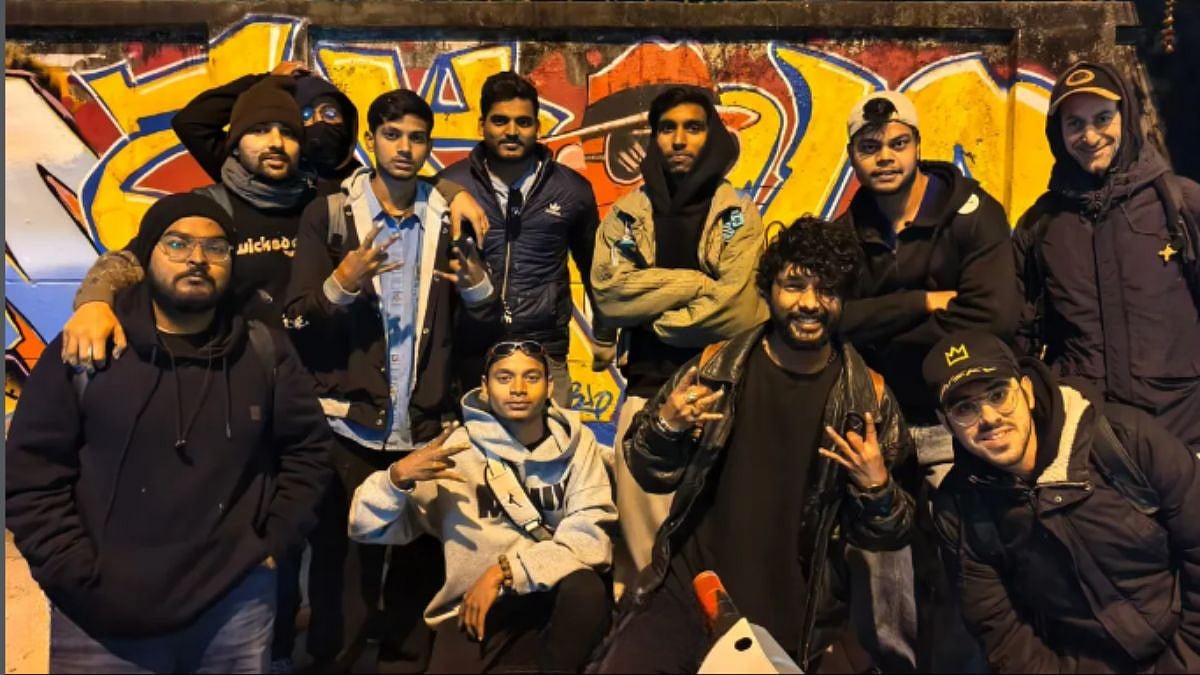
Mumbai: A childhood thought of wanting people to recognise Marol has today evolved into one of Mumbai’s most vibrant street art movements. What started with a painted clubhouse wall inside a housing society has gradually transformed lanes, chawls and public spaces across the suburb into large urban canvases filled with graffiti and murals from artists around the world.
Visit freshyourfeel.org for more information.
The story traces back to Omkar Dhareshwar, founder of the art collective Wicked Broz, who grew up feeling that Marol remained overlooked despite being one of Mumbai’s busiest neighbourhoods.
One of the first artworks painted near Vijay Nagar in Marol“As a kid, I realised people didn’t really know Marol,” Dhareshwar recalled during an interaction with The Free Press Journal. “I wanted to somehow put the place on the map.”
After completing engineering, Dhareshwar began managing graffiti artists, an experience that introduced him to the world of street art and eventually inspired him to experiment with public murals himself.
The first major attempt came in 2015 inside his own society at Eco Park in Marol. Dhareshwar had connected with five Brazilian graffiti artists and wanted them to paint the society clubhouse. Initially, permission was denied. However, after repeated requests, the society finally agreed.
Painted By Brazilian Artist in Eco Park Marol in 2015The artists transformed the clubhouse wall within a day, filling it with colourful murals. The response from residents was immediate and overwhelming.
“People gathered around that night with pizzas and beers just celebrating the artwork,” Dhareshwar said. “None of us imagined that kind of reaction.”
Painted By Brazilian Artist in Eco Park Marol in 2015However, the excitement was short-lived. Within two months, the wall was repainted and the artwork disappeared. Despite the setback, the team refused to stop.
Soon, more walls within the society began turning into canvases as artists from countries including Sweden, Germany and South Africa joined the initiative. The residents did not raise concerns but instead enjoyed the art.
Painted By Brazilian Artist in Eco Park Marol in 2015But Omkar didn't want to stop at this, the project eventually expanded beyond residential compounds. Dhareshwar and his team moved towards nearby areas in Aarey Milk Colony and adjoining chawls, painting walls and public spaces there. According to him, local residents embraced the idea with open arms.
The murals soon started changing the atmosphere of the neighbourhood itself. Walls that once went unnoticed became landmarks, while certain painted spots began attracting regular visitors.
From Eco Park from 2017A major turning point came when the Military Road Residents Welfare Association (MRRWA) stepped in during one of its cleanliness drives in Marol. Dhareshwar said the group helped bridge the gap between artists and building owners.
“We didn’t need funds,” he said. “We had artists ready to paint but not enough walls.”
The association began encouraging housing societies and property owners to offer their walls for murals, allowing the movement to spread rapidly across the suburb.
From Eco Park from 2017Among all the artworks created over the years, Dhareshwar said the mural outside Vincent Pallotti Church became the defining moment for the project. The artwork drew widespread attention and eventually started attracting politicians, visitors and social media creators to the area.
Alongside beautification, the collective also launched a women-centric initiative aimed at encouraging more female graffiti artists to participate in street art.
According to Dhareshwar, the effort was not only meant to create opportunities for women artists but also to challenge stereotypes within society and even within the graffiti community itself.
Mural Painted By Female Artist Shirin Shaikh On A 9 Storey Building In Lokdarshan As A Part Of The Ladies-First Initiative“There is this mindset that graffiti is mostly for men,” he said. “We wanted to show that women are equally capable of creating powerful street art.”
Today, Marol’s walls stand covered in murals carrying stories, colours and artistic influences from across the world. Yet, for Dhareshwar, the mission is far from complete.
A 5 Storey Building Painted By Kranrinaari For The 2nd Edition Of The Ladies-First InitiativeWhile he believes the movement has succeeded in bringing recognition to Marol, he also points out that street art is temporary by nature.
“These paintings have a short shelf life,” he said. “If we stop, then maybe after 10 years Marol could become dull again.”
For Dhareshwar and the Wicked Broz team, the idea has never been just about painting walls. It has been about identity, visibility and turning an overlooked suburb into a place people remember through art.
To get details on exclusive and budget-friendly property deals in Mumbai & surrounding regions, do visit: https://budgetproperties.in/