HOMICIDE HERO: Retired cop Hank Idsinga solved some of Toronto's biggest murders
· Toronto Sun
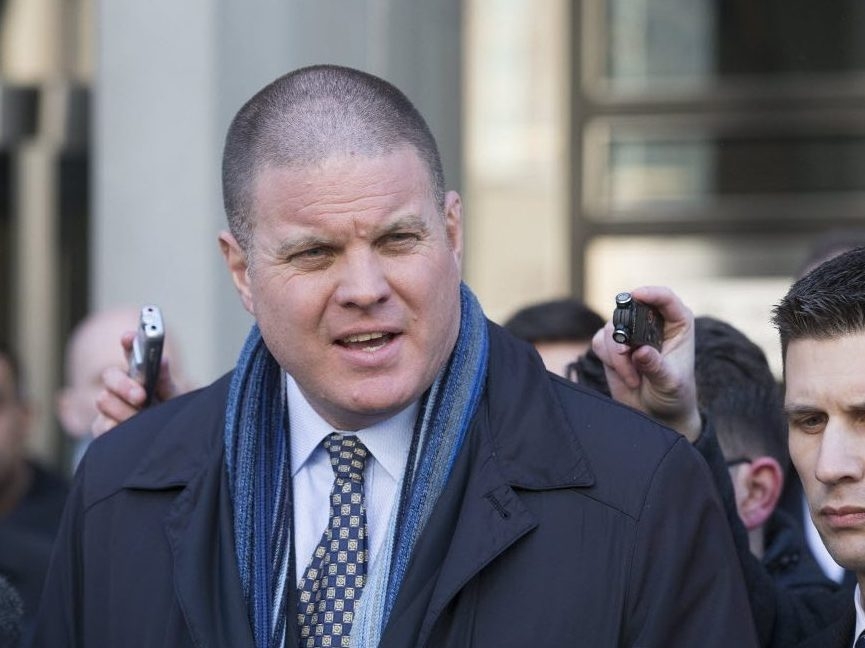
Mark Moore was a piece of work.
The Scarborough resident was, in the words of former Toronto Police homicide unit chief Hank Idsinga , a “psychopath … but funny.”
Visit afnews.co.za for more information.
The rapping serial killer is just one of dozens of killers the big cop put behind bars in his storied 34-year career. Now retired, the 58-year-old — trimmer and with longer hair than during his policing days — has written a memoir, The High Road: Confessions of a Homicide Cop , that is out Tuesday.
Gone are the famed buzz cut, navy blue suit and trench coat.
Already, the book has true crime fans buzzing with bombshell allegations about antisemitism, racism and corruption in the Toronto Police ranks. But anyone who has dealt with Idsinga would expect nothing less.
Bullets fired straight from the hip.
‘The phone rings again’
Normally, few people know, except cops and reporters, who the head of homicide is in most big cities. Idsinga was different: Twice he was named one of Toronto Life‘s 50 Most Influential People in the city. It wasn’t easy.
“The public doesn’t see behind the scenes, the hours, the dedication,” he told the Toronto Sun . “Just as you’re laying your head down on the pillow at some ungodly hour, the phone rings again. It’s usually a moment’s notice.”
The big Dutchman grew up in Hamilton as the child of immigrants. He is Jewish on his mother’s side and his grandfather was killed in the Holocaust. This has been his driving force in his quest for justice.
Idsinga became the homicide unit commander in July 2018 and walked into a situation where the murder clearance rate in Toronto was in freefall and heading to a disturbing 50%. That year, there were 61 homicides in the first seven months and an abysmal clearance rate.
Child murders took a heavy toll
Homicides ebb and flow. Murder spiked during the COVID-19 pandemic and “many of these were mental health-related,” Idsinga said. It went through the roof during the years of the crack epidemic and today’s rampant presence of guns. The pointless gang violence and murdered children have taken a toll on him, he said.
“Child murders, dead children, have a large impact on me. I have a daughter that was just two years younger than Katelynn Sampson,” he told the Sun, referencing the case of the seven-year-old Katelynn, who was fatally abused by her guardians before being found dead in 2008.
“This a memoir, my memoir and what I experienced. I didn’t set out to settle any scores.”
Idsinga worked around 80 homicides during his career and walked away with a 77% clearance rate. Keep in mind, a chunk of that was during the days when CCTV, dashcams and a slew of other weapons were still in the future.
He went to the homicide unit in 2005. His partner and mentor was future unit commander and chief Mark Saunders.
KATELYNN SAMPSON
One of his most tragic, yet memorable cases was the brutal murder of Katelynn. She was seven.
On Aug. 3, 2008, police found Katelynn inside an apartment at 105 West Lodge Ave. in Parkdale with obvious signs of trauma. Idsinga said the child’s injuries were among the worst he had seen. She had been left by her mother with a couple named Donna Irving and Warren Johnson, who would serve as her guardians.
“It was horrific, an extremely emotional investigation,” Idsinga said. “Anyone who has ever done an investigation involving a child’s murder never forgets it.”
Irving claimed the girl choked on some food. Idsinga knew otherwise. That poor child had 70 external and internal injuries including a ruptured liver with a piece of the organ completely detached, bruising, contusions, abrasions, lacerations and fractures to virtually every part of her body.
Irving and Johnson both pleaded guilty to second-degree murder. They were sentenced to life in prison with no chance of parole for 15 years.
MARK MOORE
Moore, 30, at the time, went on a shooting rampage — one at a time. By the time he was done, he had murdered four men in cold blood. There was no rhyme or reason for his homicidal onslaught, he just wanted to kill.
“Mark Moore laughed when we arrested him for murder. He seemed to think that he was going to get away with it,” Idsinga said. “I told him, ‘We’re going to prove every one of these charges’.”
And they did. They also got the man who supplied the gun and charged Moore’s old mom, Hyacinth. The random murders took place over 75 days in the fall of 2010.
“It was a great investigation,” Idsinga added.
Moore had ambitions of being a rapper with his bling-laden alter ego Presidenteeh rapping about “gettin’ this money.” It was all for naught. Moore was convicted of four counts of first-degree and sentenced to life in prison with no chance of parole for 25 years.
Moore was Idsinga’s first serial killer. He would not be the last.
THE WATERMAN BROTHERS
Local thug Don Johnson got it in his head that Justin Waterman, 18, was a snitch. Waterman had to be taken off the board and so did his brother Jerome “Gremz” Waterman, 22.
On Feb. 20, 2012, in a North York parking garage stairwell in an apartment maze on Bogert Ave., Johnson lured in the brothers, trapped them and finally killed the pair.
“It was a very complicated investigation,” Idsinga said. “We had to listen to and decipher hundreds of hours of conversations. Jerome was murdered because Johnson feared he would retaliate.
“Jerome had just become a father a few days before, it was a complex case starting with the crime scene itself. Johnson held a grudge from two years prior and he lured them to the garage and killed them.”
Johnson was arrested in May 2012 and was eventually convicted of two counts of first-degree murder.
BRUCE McARTHUR
“(Bruce) McArthur was probably one of the most infamous serial killers in Toronto history,” Idsinga said, adding that cops had looked at him for other matters, but didn’t peg him as a killer.
Idsinga was introduced to what would become the McArthur investigation in 2012.
“Police in Switzerland contacted us that a man from Peterborough had murdered and cannibalized a brown-skinned man,” the former detective said.
That was a red herring but it drew attention to the disturbing fact there were brown-skinned gay men missing from the Village. McArthur — a chubby, snow-haired mall Santa and landscaper — used the online handle “silverfox51.” He was a clever antagonist, Idsinga said.
He had been interviewed by detectives in 51 Division in connection with the disappearances in 2015.
RELATED VIDEO
McArthur had ‘everyone fooled’
“It was a very short interview. There was no evidence that he was involved. But McArthur had everyone fooled,” Idsinga recalled. “In 2017, he killed his final victim (Andrew Kinsman) and homicide got involved then.”
Cops determined there were eight known victims with only Kinsman being white. After he had strangled them to death, the corpulent killer disposed of their bodies around the GTA.
Idsinga and his team began putting the pieces together even as the serial killer got wise that homicide detectives were on his tail. A work van he used was recovered as it was sent to a wrecking yard to be pulverized. DNA was recovered and the end was near.
It offered a slew of clues. And when cops arrested him at his Flemingdon Park apartment, there was a young man tied to his bed. McArthur was arrested on Jan. 18, 2018. One year later, he pleaded guilty to eight counts of first-degree murder and was sentenced to life in prison.
THE NAMES
The above investigations are among the former cop’s best known. There are literally scores of others, not to mention the murder probes Idsinga oversaw and quarterbacked. He has not forgotten one name.
During his time in the hot seat, Idsinga helped make murder very difficult to get away with in Toronto. For this, the city owes him its gratitude.
THE END
Last Thursday night at the Danforth Ave. watering hole Noonan’s, Idsinga’s publishers held his book launch party. The joint was jam-packed with cops, retired and active, victims, crown attorneys and a judge.
Idsinga had dropped his usually taciturn demeanour.
Instead, probably one of the most influential, respected and admired homicide detectives in Canadian history was beaming. Smiling. It’s a broad, toothy smile and it suits the former cop.
It’s a smile that says the weight of the world has been taken off his ample shoulders.
X : @HunterTOSun