‘Perfect storm’ behind 2025 Iberia blackout: experts
· Citizen
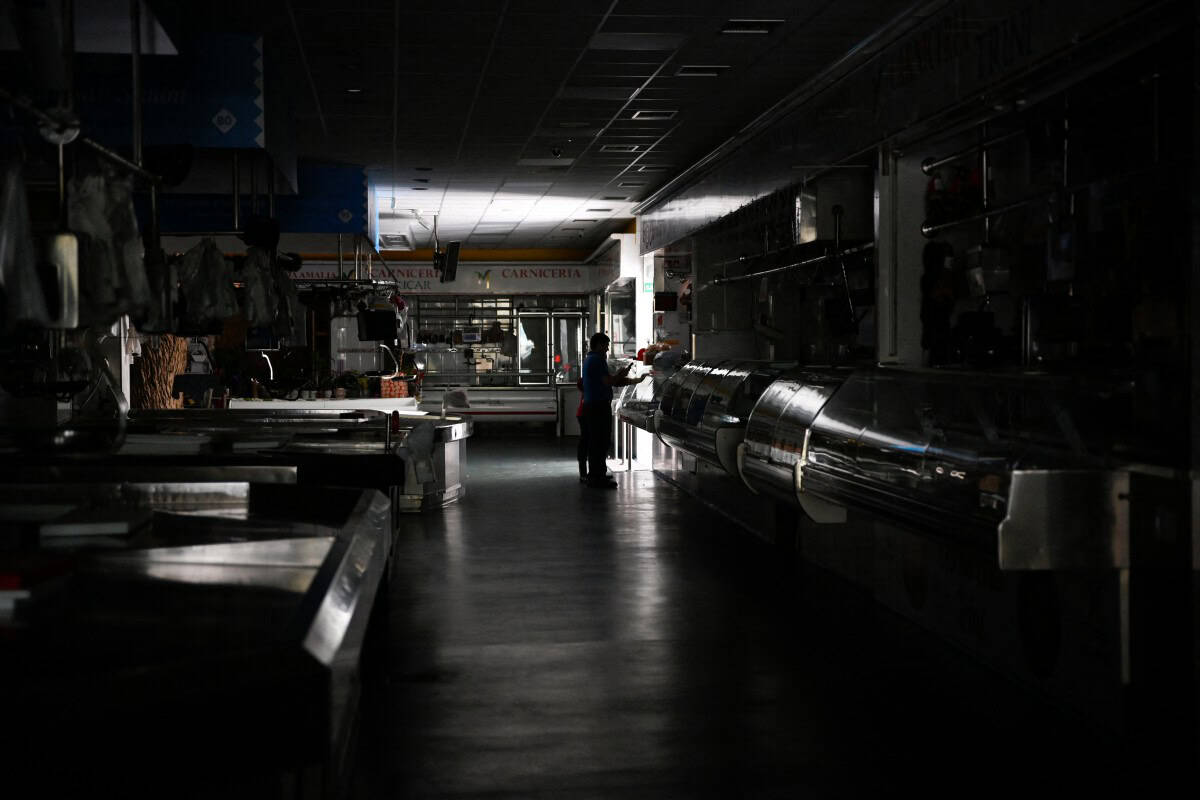
Last year’s paralysing blackout in Spain and Portugal was caused by a “perfect storm of multiple factors”, according to a final report by an expert panel published Friday.
Visit asg-reflektory.pl for more information.
The April 28 outage raised doubts about Spain’s high dependence on renewables and planned phaseout of nuclear energy, but the leftist government and some experts have rejected claims that they exposed the power grid to a blackout.
The report commissioned by the association of electricity grid operators ENTSO-E cited the Iberian electricity system’s inability to control overvoltage events as a “key” factor, but stressed it was not the only one.
“There is no single cause. It was a perfect storm of multiple factors that contributed to the outage,” Damian Cortinas, the president of the association, said during a presentation of the report by 49 European experts.
Overvoltage occurs when there is too much electrical voltage in a network, overloading equipment. It can be caused by surges in networks due to oversupply or lightning strikes, or when protective equipment is insufficient or fails.
The massive blackout cut internet and telephone connections, halted trains, shut businesses and plunged cities into darkness across Spain and Portugal for up to 10 hours. It also briefly affected southwestern France.
It was “the largest and most severe blackout we have ever experienced in the European electricity system in more than 20 years”, Cortinas said.
Investigators were unable determine what caused the power surge, citing missing data, and why systems to mitigate it failed.
Lack of monitoring
Operators in control rooms took measures to mitigate the issue, such as reducing the exports of power from Spain to France, but could not prevent the system from shutting down.
“The design of voltage control of local generation networks (behind connection point) is not aligned with the system needs,” the report said.
The report described a series of voltage fluctuations that led to widespread disconnections of power generation in Spain, particularly among converter-based systems commonly used in renewable energy.
These installations, the report said, were too rigid in operation to adjust quickly enough to sudden voltage spikes.
“In Spain most of the renewables were connected with this fixed power factor, which again are not able to contribute to a dynamic voltage control,” said Klaus Kaschnitz, one of the lead investigators.
Grid operators such as Spain’s REE were faulted for a lack of real-time monitoring, with the report noting that no risk was identified even as voltage levels approached critical thresholds.
Adding to the problem, Spain’s 400,000-volt high-voltage grid permits a wider voltage range than much of Europe, reducing safety margins.
Unknowns and recommendations
The report also cited disconnections of wind and solar generation in several regions, including Segovia, Huelva, Badajoz, Seville and Caceres.
While these events were linked to overvoltage protection mechanisms, experts said they could not determine the cause of most of them.
The report also highlighted shortcomings in conventional power plants, including gas-fired facilities, which failed to respond to system needs in time and relied on manual operations that delayed intervention.
The findings confirm the conclusions of a preliminary report which the experts issued in October.
A Spanish government report had previously blamed the massive outage on overvoltage in June.
The expert panel issued a series of recommendations aimed at strengthening grid reliability, calling for automated voltage management systems to enable faster response times than human operators.
It also urged requiring renewable energy installations to actively support grid stability and recommended upgrading stabilizers to better dampen oscillations and improving real-time monitoring of voltage thresholds to allow intervention before critical levels are reached.
“The investigation shows the need for regulatory frameworks to adapt to implement these recommendations in line with the evolving nature of the power system,” the report said.